Yiddish Arts
and Culture
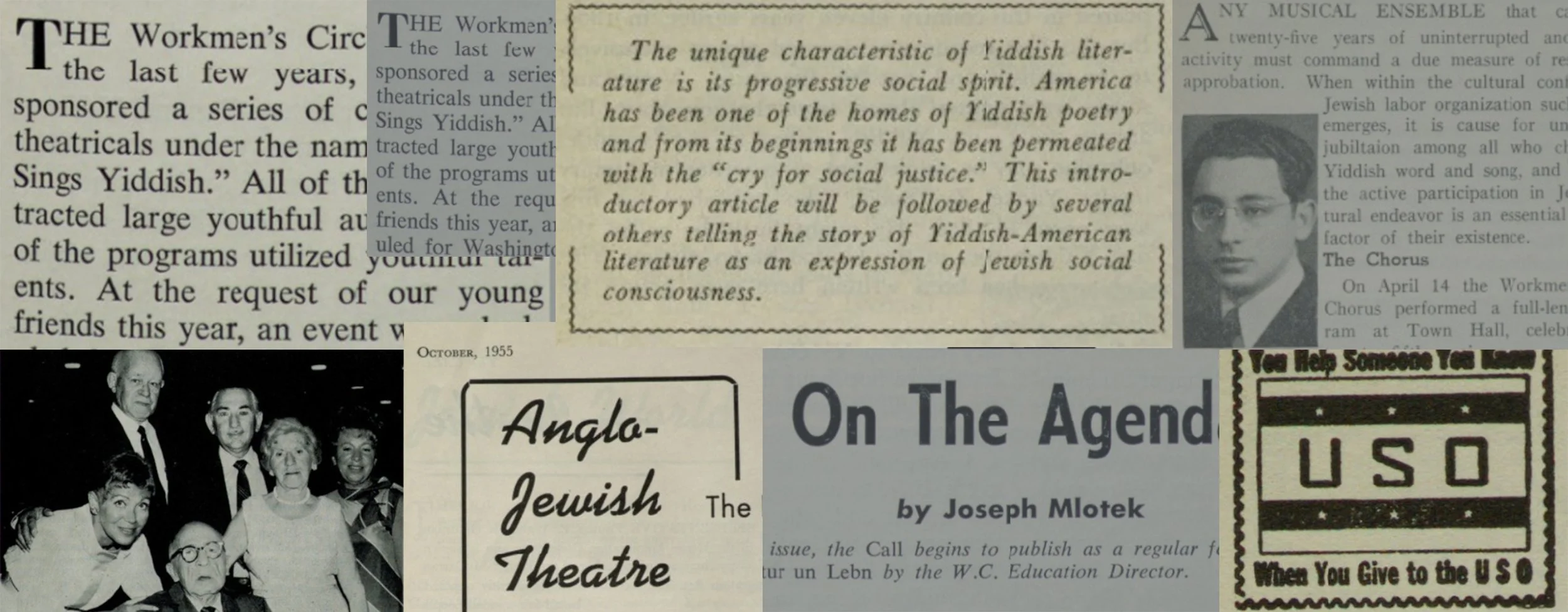
Yiddish has been the soul of the Workers Circle since the very beginning. Born from the voices of its founding immigrant members, who built their lives in America while integrating the culture of their homelands, all of its early communications and activities were conducted in Yiddish. As the organization began welcoming a new, American-born generation, it also took every opportunity to immerse the new membership in Yiddishkayt through Yiddish schools, literature, theater, and music
Bridging Two Worlds: The Struggle to Balance Yiddish and English
The Workmen’s Circle began as a Yiddish-speaking organization serving immigrants who arrived speaking no English. As members’ children grew up leading American lives, the organization grappled with how to remain true to its Yiddish roots while connecting with a new generation that communicated in English but shared Workmen’s Circle values. It joined worldwide efforts to preserve and promote Yiddishkayt by launching schools to teach Yiddish and offered radio and recorded Yiddish lessons to reach even more people.
Highlights from the archive


Yiddish Writers and Their World
Yiddish was more than a language, it was a cultural universe. Yiddish writers like I.L. Peretz and Sholem Aleichem built a literary tradition that captured the soul of Jewish immigrant life, while poets like Morris Rosenfeld gave voice to workers' struggles. The pages of the Call contain countless reviews of Yiddish books, tributes to Yiddish writers and the Yiddish press, and translations of Yiddish poetry, highlighting a golden age of Yiddish culture in America.
Highlights from the archive


Yiddish and the Performing Arts
The Workers Circle championed Yiddish performing arts from its earliest days. Within twenty years of its founding, the first of its many Yiddish choirs, orchestras, and theater groups (including the still-running Folksbiene) were established in New York, with branches around the country forming their own performing arts groups over the decades. Performances were popular branch activities, and the Workmen’s Circle hosted music festivals to promote the Yiddish language and Yiddishkayt to all.
Highlights from the archive