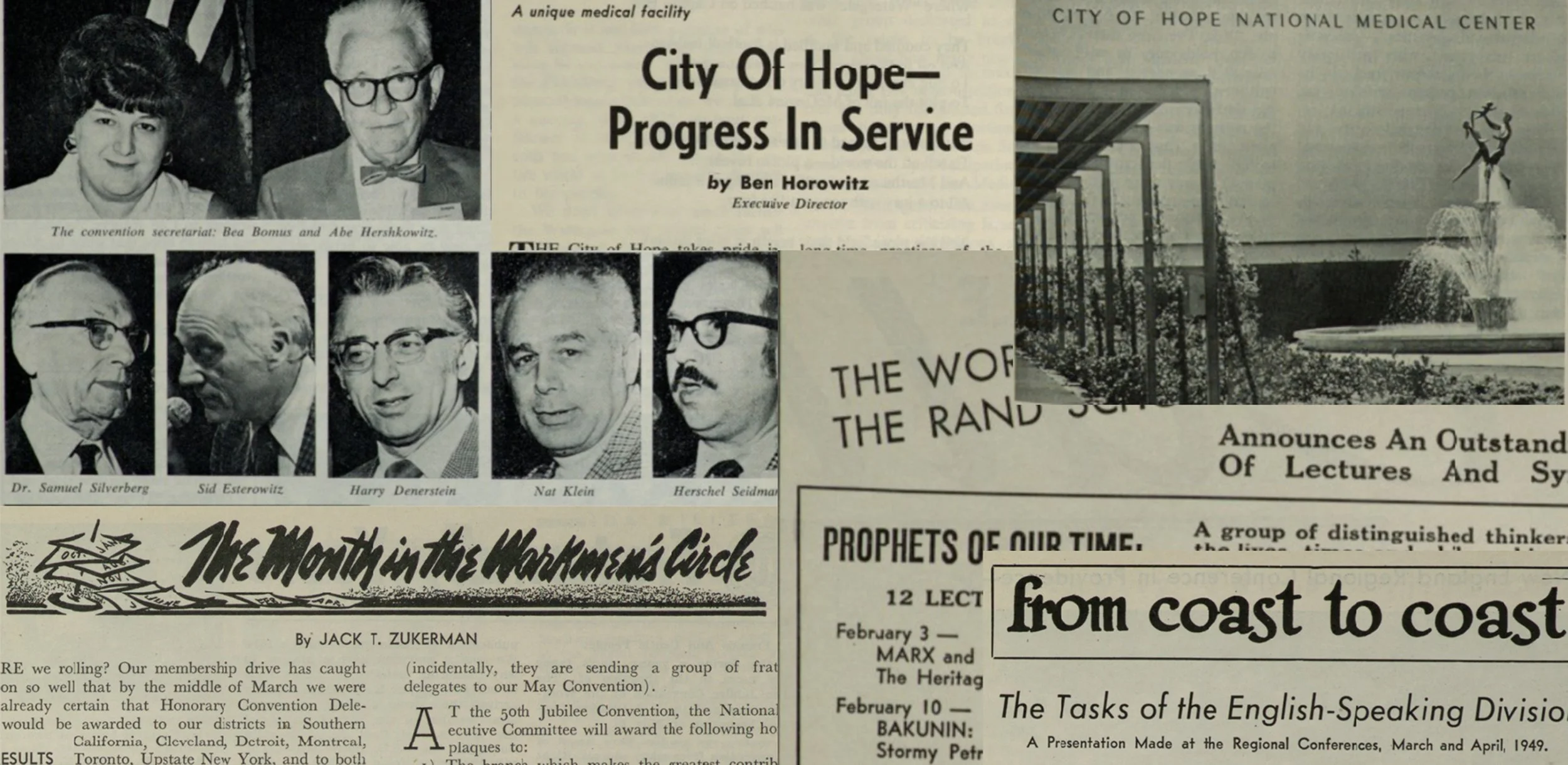
Jewish Life in America
The Workmen’s Circle offered a safety net and a secular community for our Eastern European immigrant founders and members. It allowed American Jews to live their Jewish values outside of synagogues, and connect with like-minded Jews and labor activists across the country, as well as around the world. The Call provides a window into the successful adaptation of the Workmen’s Circle’s members to their new lives in America.
Beyond New York
Though the Workmen’s Circle started in New York, it quickly spread across the United States and Canada. Major Workmen’s Circle communities from Boston to California regularly provided news of their branch and regional activities to the Call editors. Yearly conventions helped form strong connections between members across the country, and traveling members were often welcome guests at branches in different states.
Highlights from the archive


From Summer Camp to Funerals
The Workmen’s Circle provided benefits to its members across the country in every aspect of life. These included schools for children, continuing education for adults, summer camp programs, medical services, old age homes, and burial services.
Highlights from the archive


Jewish Holidays
The Call contains thoughtful debates about celebrating Jewish holidays in secular ways, with the High Holidays a regular topic. Additionally, the Passover Third Seder, introduced by the Workmen’s Circle in 1926, remains a tradition to this day, and Purim celebrations were popular in many branches.
Highlights from the archive