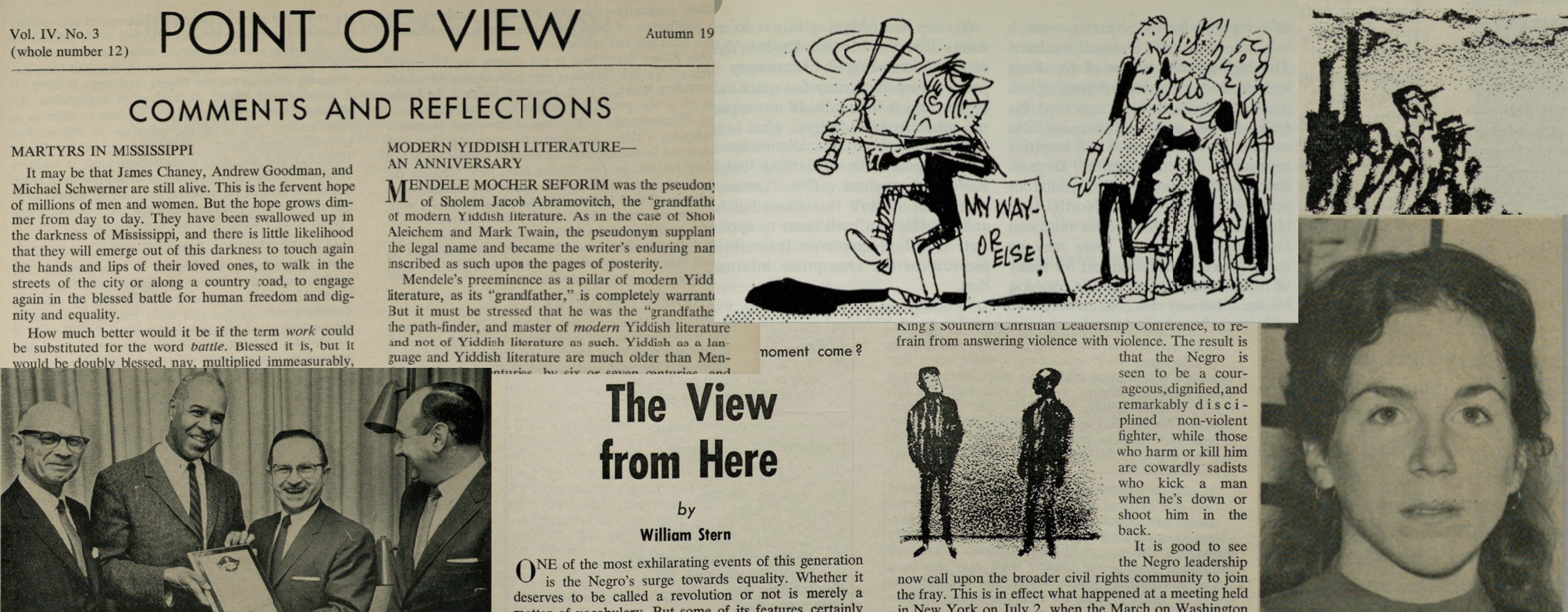
Civil Rights Activism
The Workmen’s Circle engaged with the defining challenges of the 1960s, from making the moral case against segregation, to marching alongside civil rights leaders in the South. Founded by immigrants fleeing persecution and discrimination, the organization saw in the Black struggle for equality an echo of their own journey.
Bearing Witness: The Workers Circle’s Role in the Civil Rights Movement
For the Workmen’s Circle, the fight for civil rights wasn't just a cause to support from the sidelines, but a movement to join. The Call regularly covered the organization's direct engagement in the movement, and, by bringing attention to prevailing social inequities, motivated the membership to participate in the struggle.
Highlights from the archive


Black and Jewish Partnerships
Black and Jewish communities shared experiences of persecution and discrimination, making them natural allies in the fight for justice, yet tensions emerged over economic competition, neighborhood changes, and conflicting expectations. The Call explored the complex dynamics between two minority communities trying to navigate their shared commitment to civil rights, and highlighted the contributions of Black movement leaders.
Highlights from the archive


Labor’s Civil Rights Commitment
In the pages of the Call, labor leaders grappled with their dual responsibility: fighting discrimination within their own ranks, while championing civil rights in the broader society. From supporting the Supreme Court's school desegregation decision to debating the tactics of the civil rights movement, organized labor was a strategic and purposeful ally in the struggle for racial equality.
Highlights from the archive